Secure Attachment: Let’s Explore
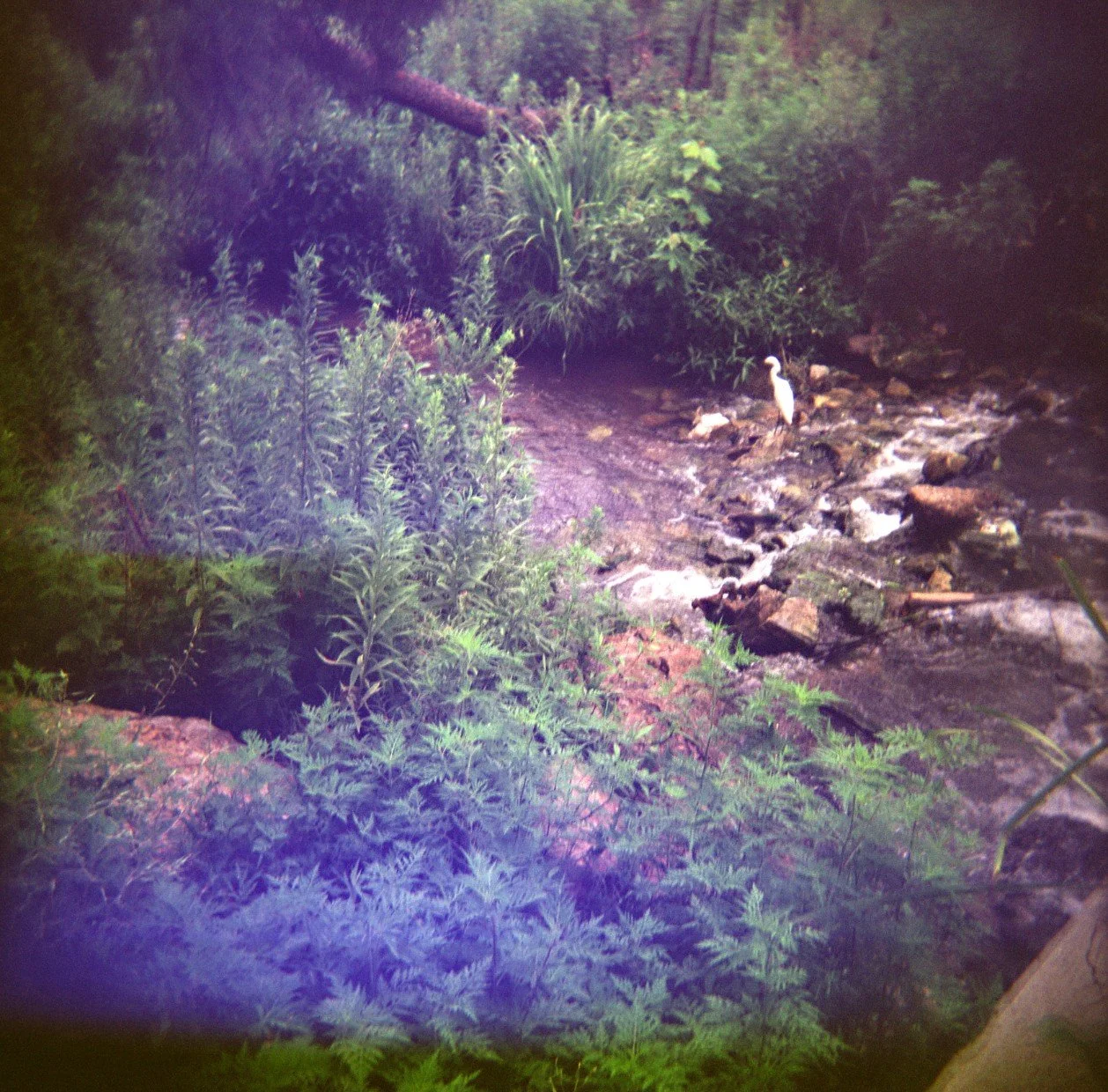
Jewel Anderson, Holga 120mm Film
Not all those who wander are lost.
— J.R.R. Tolkien
When I was young, I spent a lot of time at my grandmother's. She lived deep in the country of Southern Missouri, on acres of land. To get to her house, you'd drive for miles through woods on a gravel road. My sisters, cousins, and I practically lived there in the summers, and one thing we always did — and loved — was explore the woods.
This was long before you could stream endless hours of TV shows and scroll social media. Thank God for that — because what we had available to us instead was endless exploration in the dense woods and creeks surrounding my grandmother's property.
Of the many times we explored those woods, one stands out to me the most. I'm sure you can picture it: five young children traipsing through the forest with wild ideas and not a care in the world, yet very much unprepared for what was to come. After hours of exploring, we realized we had no idea where we were. We meandered through that forest coming up short, again and again. We were officially lost. Five kids in the woods, and none of us knew how to get home.
It turns out we had been circling the same area the whole time — the same creek, the same trees — and hadn't even noticed. Like Bilbo in The Hobbit, had we too entered the spell bound Mirkwood forest? I couldn't tell you how we finally figured it out, but we did. And with immense relief we made our way back to my grandmother's small, yet safe, home.
My grandmother had been waiting for us the whole time…and she was not worried.
Exploration is a huge part of health and secure attachment. When we're free to explore our wants, our desires, the world around us, our relationships — it's what allows us to find who we are and know what we want out of life.
Attachment theorists have a name for what my grandmother was to us that day: a secure base.Not someone who kept us from wandering, but someone whose steady presence made the wandering safe. It's the reason a toddler can crawl across a room toward a stranger's toy and still keep glancing back over her shoulder — checking that the base is still there, still watching, still hers to return to.
Some of us had parents who never allowed us to explore. Maybe out of their own fears and under the guise of “protection” or control. Others had parents who set no boundaries and simply didn't pay attention. Both miss the mark. A secure base isn't the absence of structure — it's warmth and boundaries together. Someone who tells you when it's time to turn back, and who will still be there, waiting for you when you do.
When we have caregivers who are waiting for us "back at home," ready to hear about our adventures, our failures, our wild explorations — that is what gives us the ability to explore the world. The world in which I speak is not just the natural world around us—it’s our deep feelings, our fears, our dreams, our longings.
When I think back on getting lost in those woods, I smile. I laugh about how silly it was that we circled the same area for hours. Part of what makes it funny, I think, is that I wasn't lost alone — I was lost with others. We were in it together.
But if I had been alone, I think I would have been scared. Frightened, probably.
And if my grandmother hadn't been back at home waiting — with her warmth, her steadiness, her quiet certainty that we'd be okay — I'm not sure we would have believed we were okay. We might have believed instead that we'd done something wrong for leaving in the first place.
We have to get lost sometimes. That is not wrong, and it is not failure. We have to wander through life, looking behind trees and turning over rocks, to eventually know what it is we want out of life.
If we don't, our world stays small.
I wonder what "home" felt like for you as a child. Was someone waiting there — steady, unbothered, glad to see you — no matter how far you wandered or how long you took to find your way back? Or did you learn, early on, that it was safer not to wander too far at all?
Maybe that's the real question — not whether we get lost, but whether we believe we'd be okay when we do.
